Independent research · IPQ · 2023–2024
Liquid-damped compound pendulum
How does liquid drag affect the period of a compound pendulum? This study compared two drag models with oscillations measured in water.
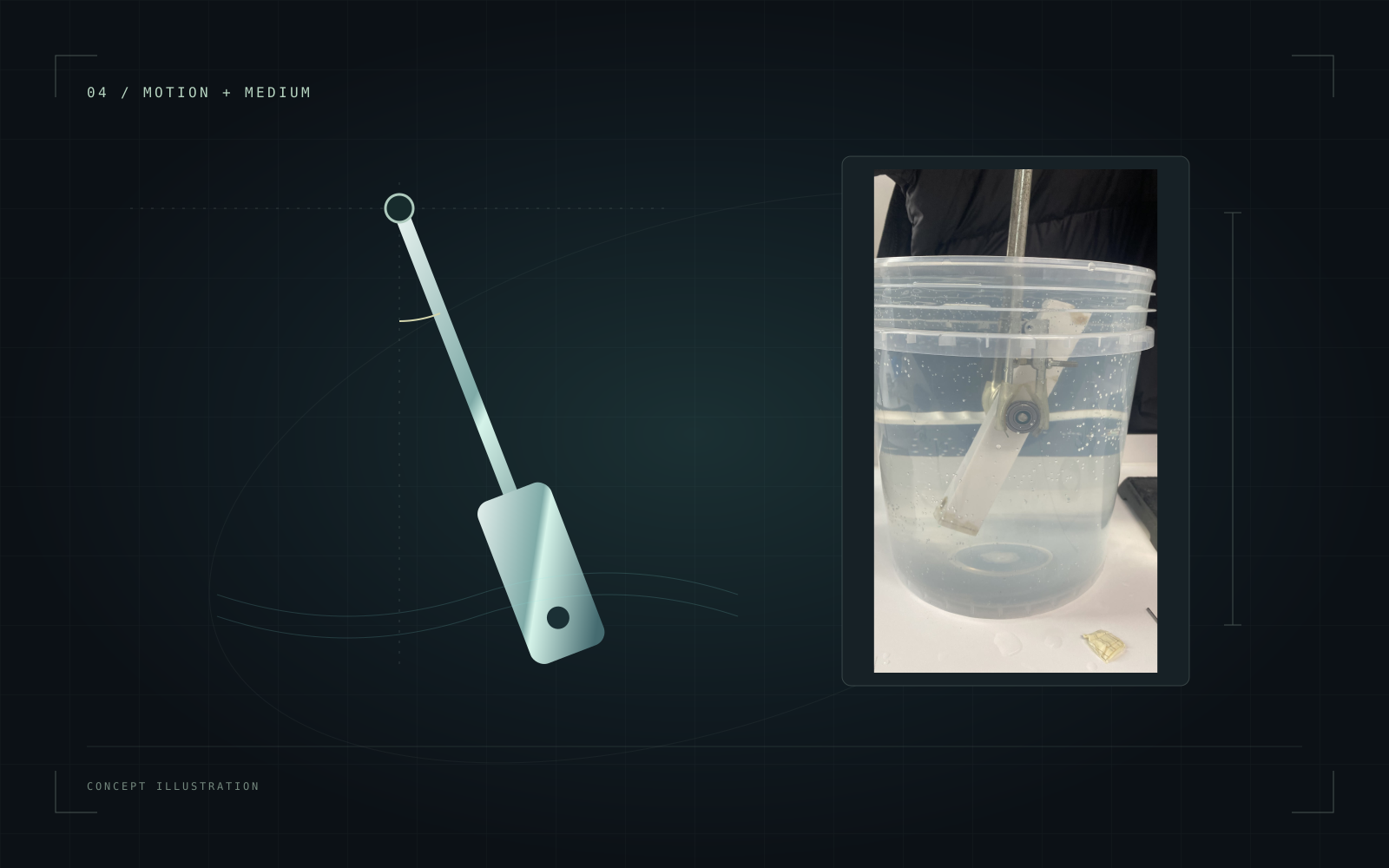
How does liquid drag affect the period of a compound pendulum? This study compared two drag models with oscillations measured in water.
I derived and compared descriptions with linear and quadratic liquid drag, using small-angle approximations to model the oscillation period.
I designed the experimental setup with 3D-printed components, varied the mass distribution and rotational radius, and measured oscillations from video. Python analysis compared the measured periods with the model predictions.
The two pendulums below start from the same angle. One loses energy through drag proportional to angular velocity, the other through drag proportional to its square. Linear drag gives an exponential envelope; quadratic drag damps large swings fast and small swings slowly, so its envelope falls roughly as 1/t. The study compared these two descriptions with measured oscillations.
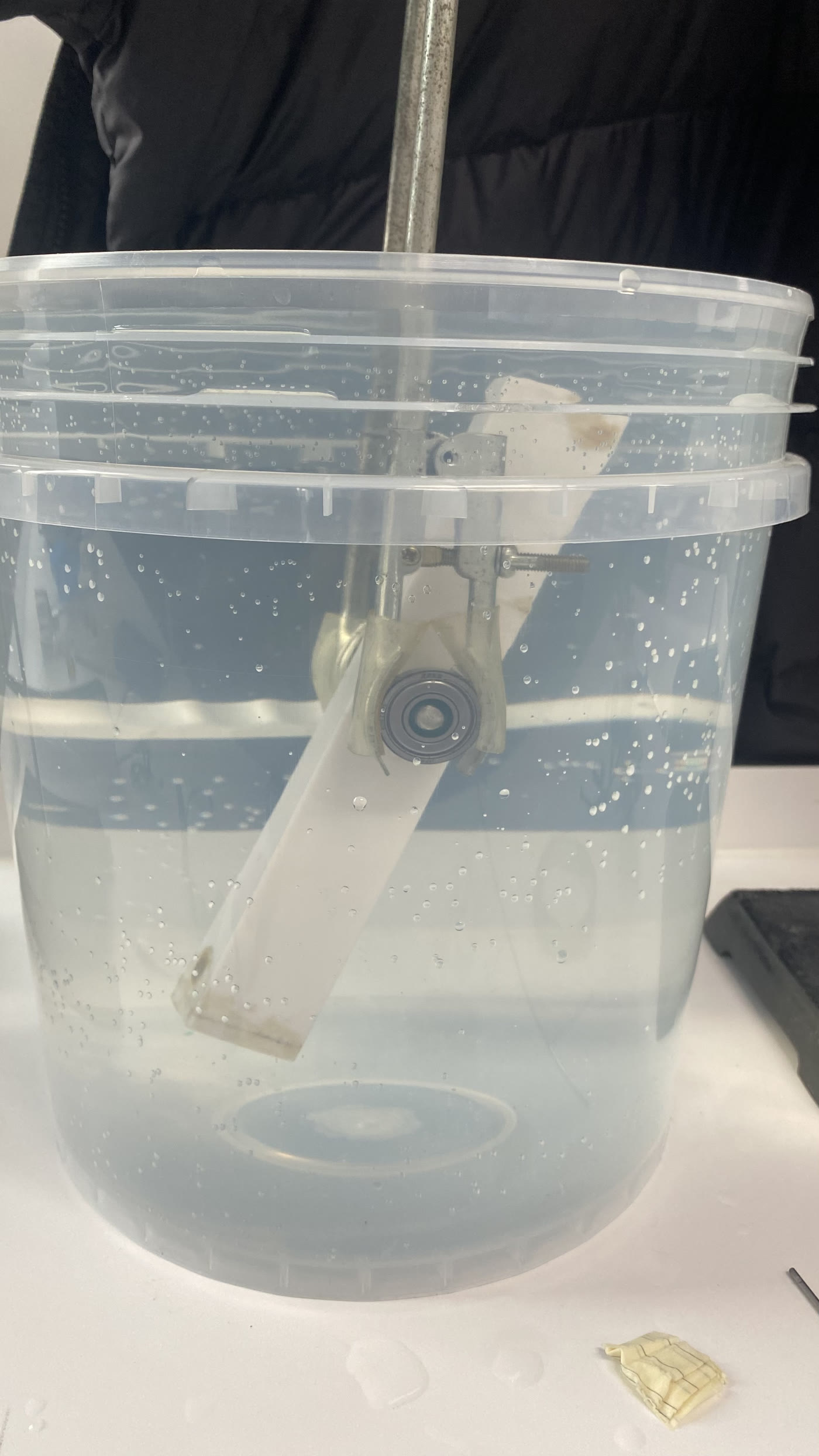
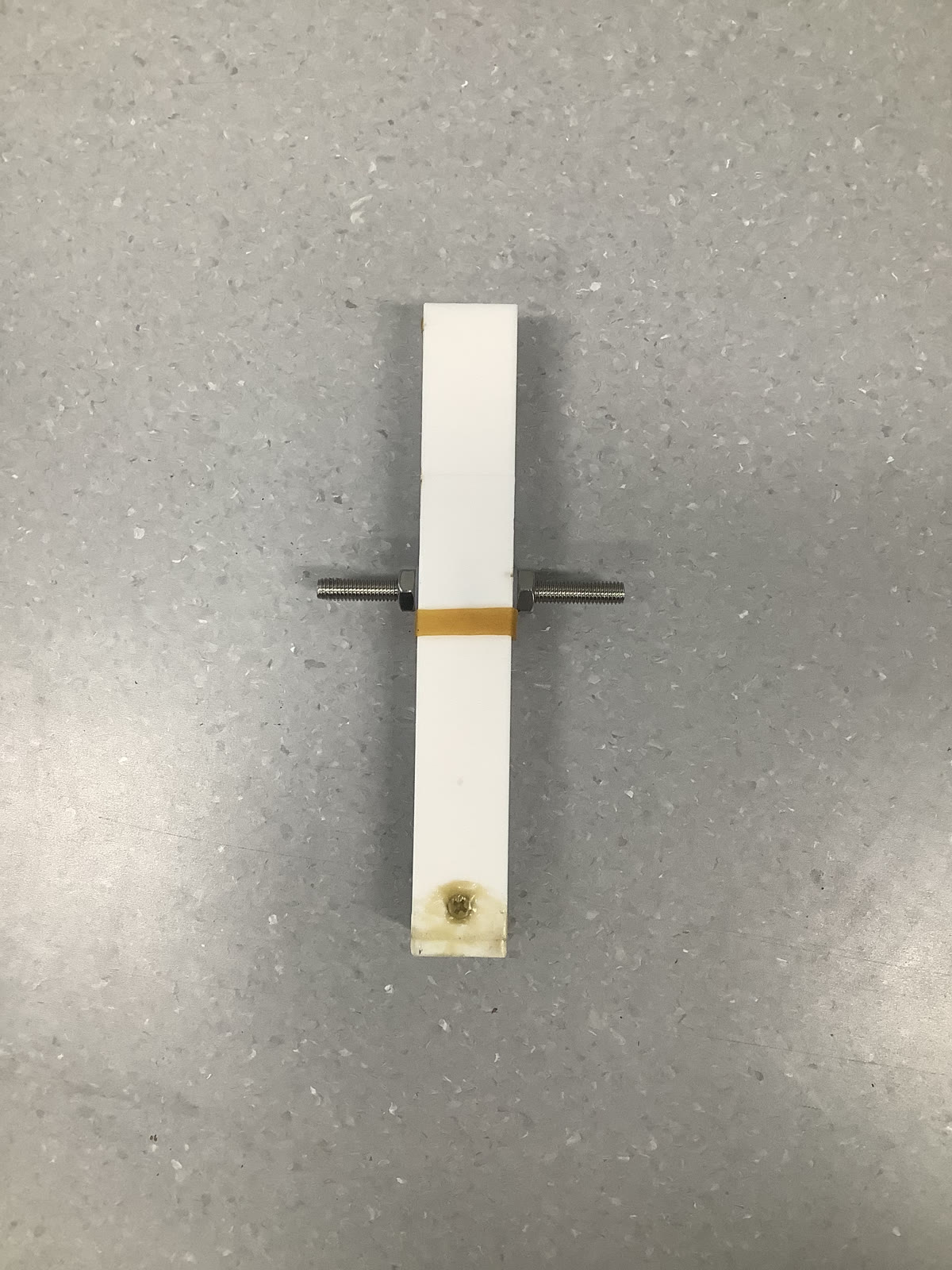
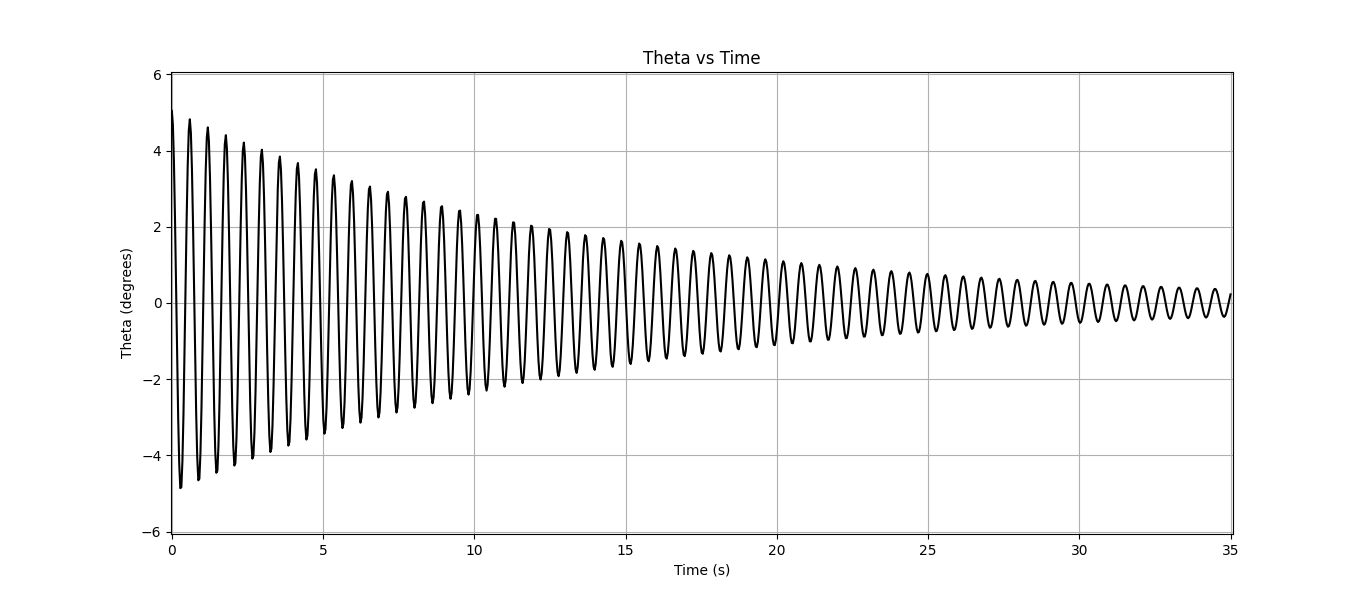
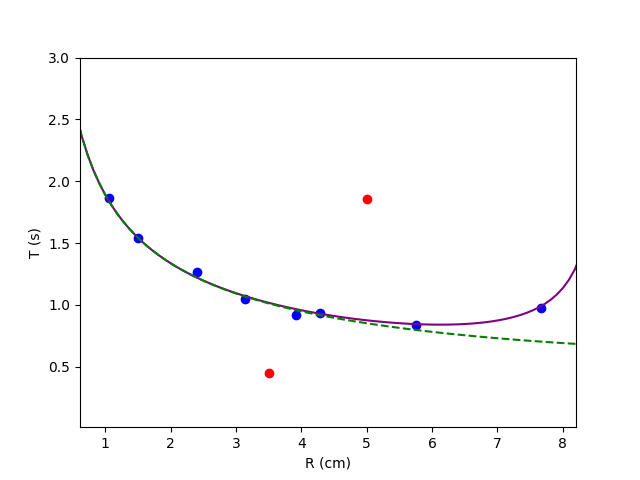
The comparison concerns the radii and experimental conditions investigated in this project. The small-angle approximation and uncertainty in timing and apparatus dimensions limit the interpretation of agreement between a model and the measurements.
The work is documented in a 21-page IPQ research report.